The Feed
Three lanes: the day’s most important AI news, wild-but-true stories of AI meeting real life, and fresh research worth a creator’s attention.
How Microsoft's Office Chief Fixed Copilot and Won Over Nadella
In the summer of 2025, Microsoft faced a wave of customer complaints regarding Copilot, its flagship artificial intelligence assistant for workplace software. Users found the tool buggy and frustratingly ineffective at automating routine tasks in everyday programs like Excel and PowerPoint. Charles Lamanna, a rising star and president at Microsoft, took charge of the crisis to overhaul the product and win back executive confidence, including that of CEO Satya Nadella. Lamanna reorganized engineering teams, streamlined product updates, and focused on making the assistant genuinely useful for enterprise workers rather than just flashy. The turnaround required intense internal restructuring and a shift in how Microsoft measures software reliability in the AI era. Fixing Copilot was critical for Microsoft because enterprise customers pay substantial subscription fees expecting seamless productivity gains. The successful fix repaired the product's reputation and cemented Lamanna's influence within the corporate hierarchy. Microsoft is now better positioned to defend its turf against competing productivity tools from Google and specialized startups.
Why it matters — Microsoft fixing its troubled workplace AI assistant highlights the intense pressure big tech companies face to deliver real productivity value to paying business customers. It shows how internal leadership can rescue a faltering major product.
Microsoft Debuts Maia 300 AI Chip to Reduce Nvidia Reliance
Microsoft has announced the Maia 300, its third-generation custom chip designed specifically to power artificial intelligence. The chip will serve as the primary system for AI inference, which is the process of running an already-trained AI model to generate answers and predictions for users. By building its own silicon hardware instead of relying exclusively on industry giant Nvidia, Microsoft aims to cut down on the massive costs and supply bottlenecks associated with running massive cloud data centres. The Maia 300 represents a major step for big technology companies that want more control over their computing supply chains. Developing custom microchips requires billions of dollars and years of specialized engineering, putting Microsoft in an elite group of firms like Google and Amazon that design their own processors. As the demand for AI features continues to strain global power grids and hardware manufacturing, having custom chips could give Microsoft a distinct financial and operational advantage. The company plans to roll out the Maia 300 across its cloud infrastructure to support products like Copilot and Azure services. Analysts will be watching closely to see how its performance compares to Nvidia's dominant graphics processing units, which currently power the vast majority of frontier AI workloads.

Microsoft President Warns AI Is Less Regulated Than Milk
Microsoft President Brad Smith has publicly warned that artificial intelligence is currently less regulated than everyday consumer products like milk. In a recent statement, Smith called for comprehensive global rules to govern the rapidly advancing technology safely. He specifically pointed out that the United Kingdom is currently in the best position to lead international efforts in setting these standards. Artificial intelligence, which refers to advanced computer systems capable of complex reasoning and content generation, has developed faster than government oversight. Smith argues that without proper legal frameworks, society faces risks related to safety, security, and the spread of misinformation. His comments add to a growing chorus of technology executives asking governments to step in with clear rules. By establishing international standards, lawmakers could prevent a race to the bottom where safety standards are ignored in favor of speed. The call for regulation highlights the tension between tech companies racing to build powerful new tools and the need to protect the public. Governments around the world are now under increased pressure to respond with meaningful policies.

Microsoft CEO Satya Nadella Calls for AI 'Emergency Brake'
Microsoft CEO Satya Nadella has publicly called for an AI emergency brake and stronger safety guardrails. Nadella joined other prominent tech leaders and researchers in urging the industry to slow down the race to build frontier artificial intelligence models if necessary. Frontier models are the most advanced, powerful AI systems currently in development. The call highlights growing industry anxiety over the speed of capability advancements outpacing society's ability to secure and understand them. While tech companies are fiercely competing for market dominance, leaders are increasingly recognizing the need for coordinated oversight. This marks a notable shift for a major tech chief heavily invested in the AI boom. The debate over how to balance rapid innovation with safety measures continues to intensify.

Nvidia GPUs are everywhere. Here are the ways companies are accessing them
Graphics processing units, or specialized computer chips designed to handle massive computational workloads, have become the most sought-after commodity in the tech world. Because traditional cloud providers cannot keep up with the demand for artificial intelligence training, a booming alternative market has emerged known as 'neoclouds'. These are smaller, independent cloud computing providers that buy up Nvidia chips and rent them out to startups and enterprises. According to recent industry research, there are now over 300 of these neocloud companies operating globally, representing a staggering 55% growth in less than a year. This explosion in alternative cloud providers shows just how desperate companies are to secure the hardware required to run advanced AI models. While tech giants like Microsoft, Google, and Amazon build massive data centers, these neoclouds offer more agile, niche access to high-performance hardware. However, relying on hundreds of smaller providers also introduces fragmentation and security challenges for companies trying to manage complex AI projects. As the semiconductor shortage eases slightly, the fierce competition among these neoclouds will dictate who gets to build the next generation of AI applications.

Amazon Drops NDAs for Data Center Deals with Local Governments
Amazon has announced that it will stop using non-disclosure agreements, which are legal contracts that keep information secret, when negotiating data center deals with local governments. This decision follows a similar move made by Microsoft earlier this year. Data centers are massive warehouses full of powerful computers used to run artificial intelligence, which is computer systems designed to think and learn like humans. These facilities require huge amounts of electricity and water, often causing worries and anger in nearby neighborhoods. In the past, keeping these negotiations secret caused a lot of community backlash, with local residents protesting against unexpected construction projects. By being more open, Amazon hopes to calm public fears and avoid delays in building the infrastructure needed for future tech growth. Local officials and citizens will now have a clearer view of what is being built in their backyards. Other major technology companies are expected to face similar pressure to drop their own secretive practices.
Amazon and others are done keeping data center deals secret. Is it enough to build trust?
Amazon has announced it will stop using non-disclosure agreements, or NDAs, when negotiating data center deals with local governments. This follows a similar move made by Microsoft earlier this year to increase transparency in local infrastructure planning. Historically, tech giants used strict secrecy agreements to negotiate quietly with towns and cities for massive data center projects. However, this secrecy fueled severe community backlash, with local residents organizing protests and blocking hundreds of proposed developments over concerns about water and electricity use. Data centers require immense amounts of energy to train and run artificial intelligence models, straining local power grids. By dropping NDAs, companies hope to build trust and smooth the approval process by being upfront with local communities. This policy shift acknowledges that building the physical infrastructure for the AI boom cannot happen entirely behind closed doors. Local governments and citizens will now have a clearer view of what tech companies are planning to build in their neighborhoods.

White House Suspends Visa Program for Microsoft, Adobe, and Other Tech Firms Amid Probe
The U.S. government is restricting a visa program called H-1B, which allows American companies to hire skilled foreign workers, especially in tech. Vice President J.D. Vance announced this limitation on Thursday, stating it affects major tech companies like Microsoft and Adobe. The reason for this suspension is an ongoing investigation into claims that Microsoft laid off American workers while simultaneously hiring more immigrant workers through the H-1B program. This move suggests increased scrutiny over how these visas are used and whether companies are following the rules. It could make it harder for tech companies to bring in international talent. The future extent of these restrictions will depend on the outcome of the government's investigation.
Nvidia, Microsoft Kick Off a New Beginning for Windows PCs With RTX Spark and AI Agents
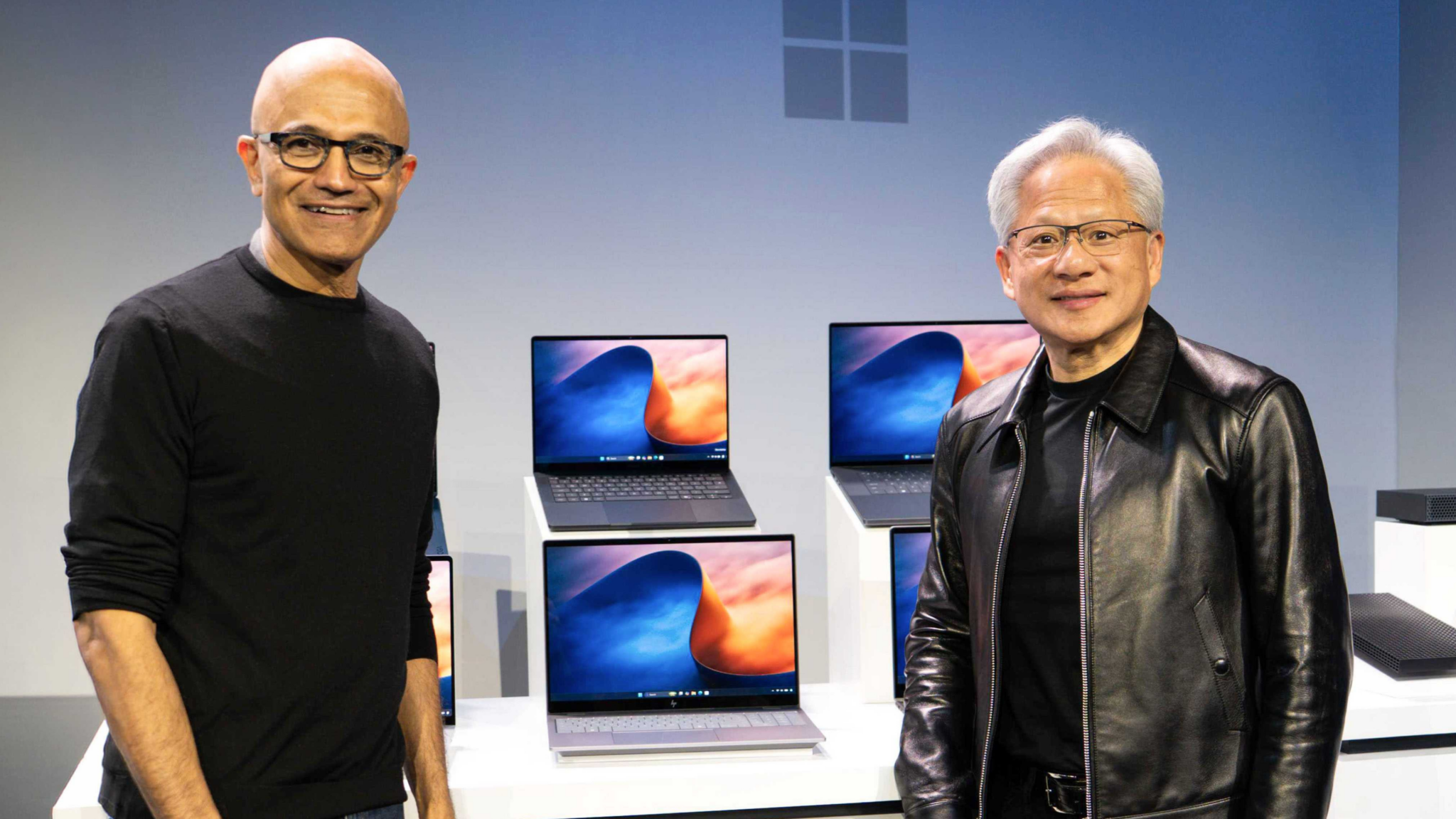
NVIDIA and Microsoft have announced a major partnership to bring advanced AI capabilities directly to Windows personal computers. At a San Francisco event, NVIDIA CEO Jensen Huang and Microsoft CEO Satya Nadella revealed new hardware and software tools, including 'RTX Spark.' These tools are designed to run AI agents—software programs that can autonomously execute complex tasks on your computer for you. The collaboration combines NVIDIA's powerful graphics chips with Microsoft's operating system to handle heavy artificial intelligence workloads locally. This means future PCs will have dedicated hardware to run smart assistants smoothly without relying entirely on cloud servers. The move marks a significant shift in the personal computer market, turning standard laptops into powerful AI workhorses. Both companies expect these technologies to redefine how everyday users interact with their computers in the coming years.
Everything Announced at Microsoft's Surface Laptop Ultra Event
Microsoft recently held a major event in San Francisco focused on Windows and its Surface line of products. The most significant announcement was the detailed release information for their new laptop, the Surface Laptop Ultra. This new device is powered by an NVIDIA RTX Spark Arm-based chip, a type of processor designed to handle AI tasks very efficiently. The laptop will also feature new Windows capabilities that are optimized for artificial intelligence, making it one of Microsoft's first 'AI PCs.' This move signals Microsoft's strong push into integrating AI directly into its hardware and software for everyday users.

Microsoft Gives Copilot More Control Over Windows and Local Files
Microsoft has announced a major upgrade to its Copilot artificial intelligence system at a recent Windows and Surface product event. The new feature gives the AI deep access to local files stored directly on your personal computer. It also grants Copilot the ability to take concrete actions across the entire Windows operating system on your behalf. Microsoft calls this concept Hybrid Intelligence, where cloud-based artificial intelligence tightly integrates with local computer hardware. Instead of just answering questions in a browser window, the assistant can now organize your documents, find hidden files, and execute system commands. While this promises to make computers much easier to use, it also raises important questions about privacy and computer security. Giving an AI tool sweeping permissions over your local hard drive means it needs to be completely secure against bugs or malicious attacks. Microsoft is betting that consumers want an operating system that feels truly alive and proactive. This update represents a massive shift in how we interact with personal computers.

Microsoft's Nvidia-Powered Surface RTX Spark Dev Box Available for Preorder
Microsoft has made its new Nvidia-powered Surface RTX Spark Dev Box available for preorder, with shipments slated to begin in November. Priced at roughly $6,000, this specialized developer computer is designed for engineers building heavy artificial intelligence applications locally. It is noticeably pricier than Nvidia’s DGX Spark mini PC launched last year, reflecting rising hardware costs across the tech industry. Personal computer prices have been climbing recently due to ongoing component shortages and the massive demand for high-end specialized processors. Developers need powerful local hardware like this to test machine learning models before deploying them on massive cloud servers. By packing high-performance Nvidia graphics and processing chips into a desktop-friendly form factor, Microsoft hopes to attract software creators who want dedicated on-premise compute. This release highlights how hardware manufacturers are racing to build specialized workstations tailored specifically for the AI engineering boom. However, the high price tag means these dev boxes will likely be limited to professional corporate teams rather than hobbyist coders. What happens next will depend on how quickly developers adopt these local boxes versus relying entirely on cloud-based computing resources.

Hyperscalers Won't Stop Spending Until Shareholders Make Them
Large technology companies, often called hyperscalers, are spending staggering amounts of money on artificial intelligence infrastructure and data centres. Wall Street analysts are growing concerned that these massive investments are driving up inflation across the tech sector and beyond. Companies like Microsoft, Google, and Meta continue to pour capital into chips and servers despite uncertain financial returns. Shareholders are starting to question whether this spending spree is sustainable or if it will hurt long-term profits. Unless investors push back and demand fiscal discipline, tech giants show no signs of slowing down their hardware purchases. This heavy spending is rippling through the economy, affecting energy markets and chip manufacturers alike. The financial standoff between tech executives and cautious shareholders will determine the near-term future of the tech industry.
Can Microsoft Help Customers Cut Back on Claude?
Recent reports reveal that major technology companies like Microsoft and Meta have started cutting back on how much they spend using Anthropic's Claude artificial intelligence models. Anthropic is a leading AI lab that builds powerful competitor models to OpenAI's systems. While Anthropic has gained immense popularity among corporate clients, mega-customers are now looking for ways to optimize their spending and reduce software costs. For Microsoft, the spending reduction on Claude highlights a complex corporate strategy as it balances its own internal models and its close partnership with OpenAI. Meta, meanwhile, has been heavily investing in its own open-source models while managing external API costs. For Anthropic, losing a portion of spending from two of its largest corporate clients is a notable financial speedbump, even as overall demand for its technology remains high. The development shows that enterprise customers are becoming more price-conscious as they scale up their artificial intelligence operations. Companies are increasingly testing multiple providers to find the best balance of performance and cost.